Case Study
SIH 2023
The brief
The Smart India Hackathon is a national-level competition where student teams build solutions to real problems posed by government ministries and industry. Our college team took on an ISRO problem statement: develop an Explainable AI (XAI) based model to predict heavy and high-impact rain events using satellite data.
The approach
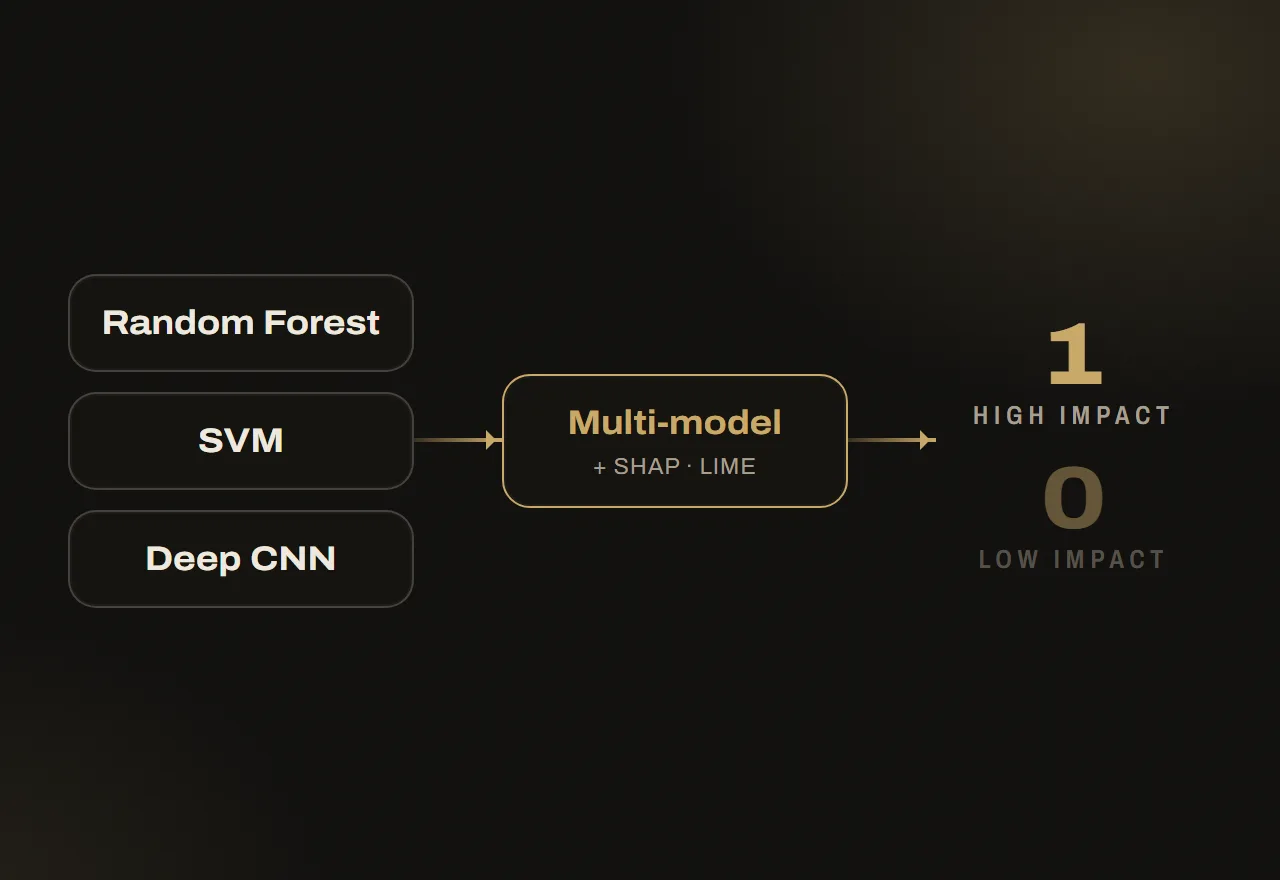
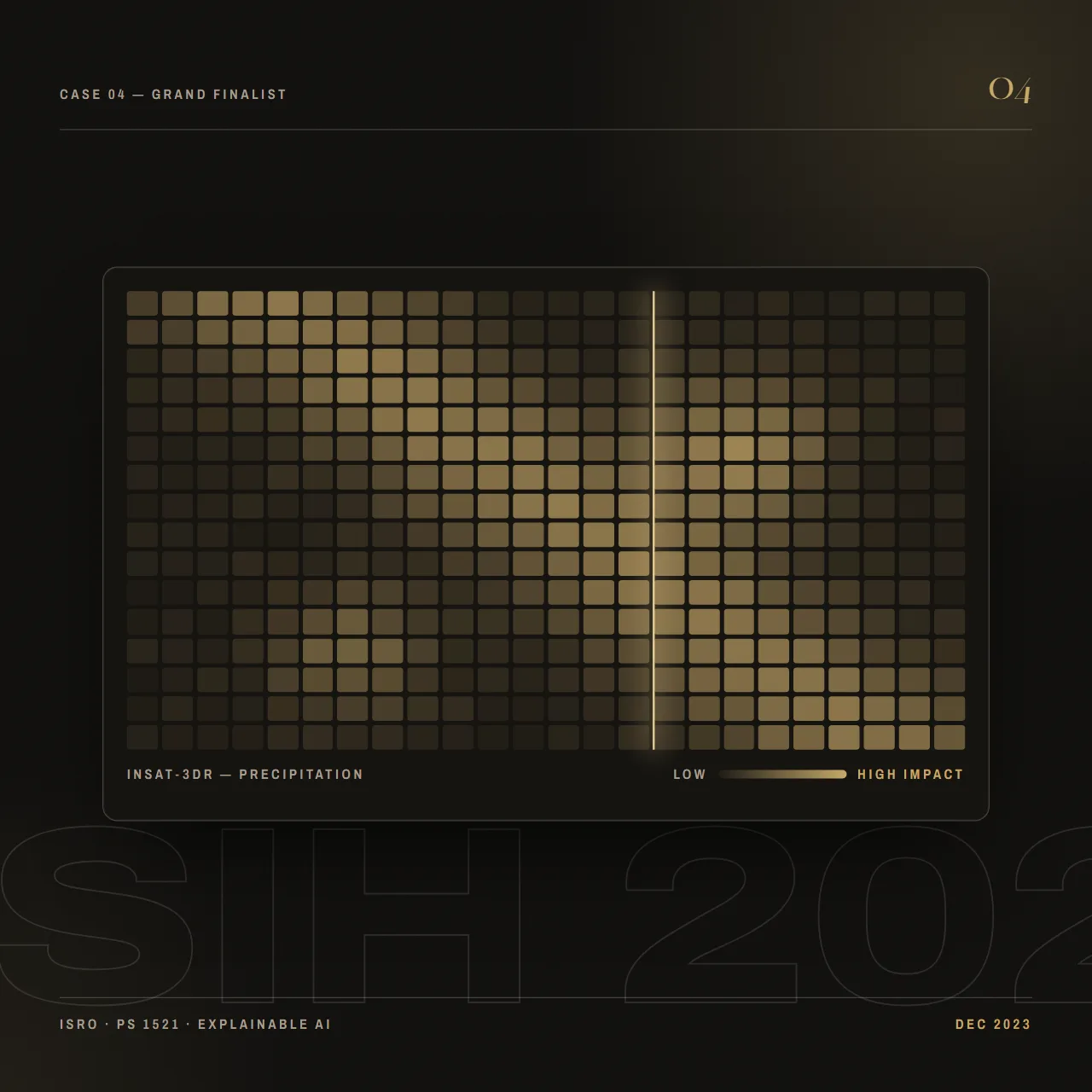
The plan: take precipitation data from the INSAT-3DR satellite, clean and pre-process it for learning, and combine it with weather forecasts and historical data to raise accuracy. A multi-model approach (Random Forest, Support Vector Machine and a deep Convolutional Neural Network) would classify each event as high impact (1) or low impact (0).
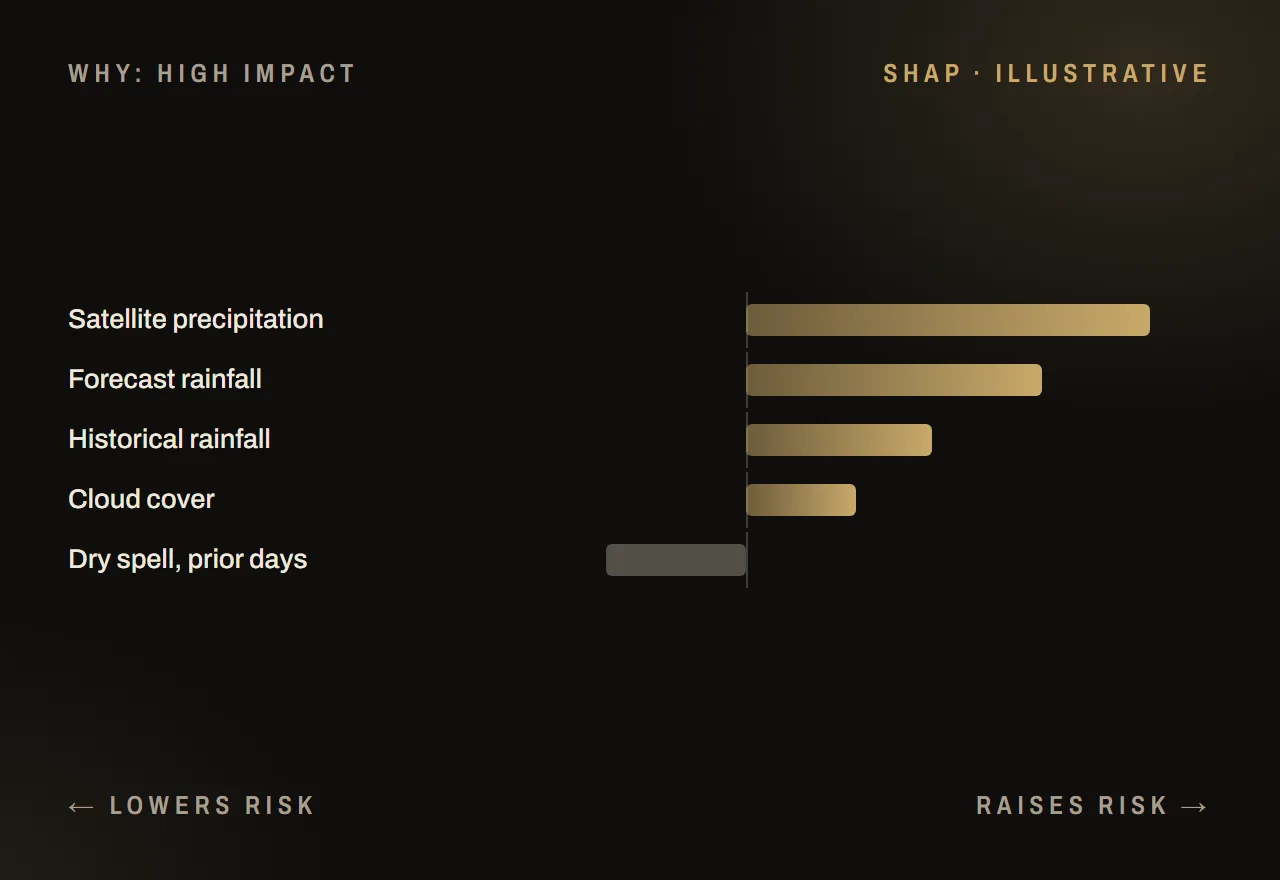
The point was trust. Each prediction would carry an explanation from SHAP (Shapley Additive Explanations) and LIME, so the people acting on it can see why the model called a storm, delivered through a web application in Python and JavaScript. By submission the product was about 60% built, with testing and validation next.
The result
Grand Finalist, Smart India Hackathon 2023, issued by ISRO, Department of Space, in December 2023, with a certificate and memento from the Grand Finale.
The rain band
INSAT-3DR — precipitation
A forecast nobody trusts is a forecast nobody acts on. The explanation, which signals pushed a prediction over the line, was the product, not an extra.